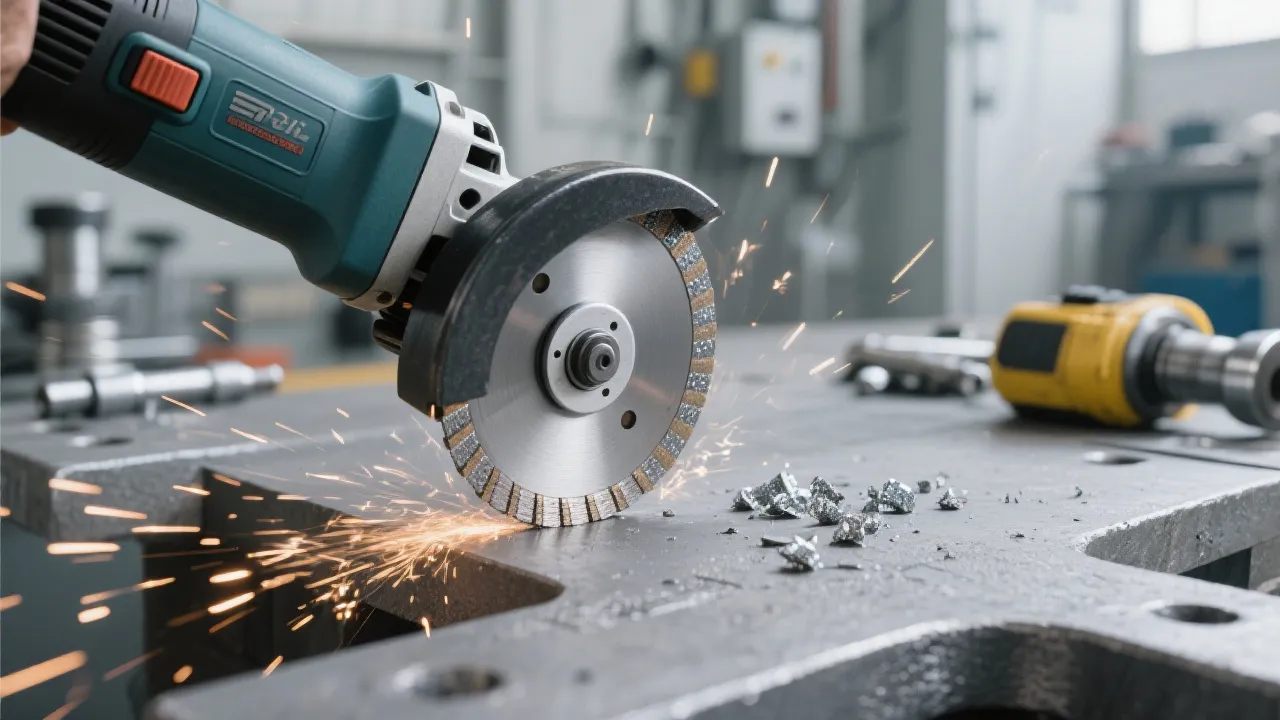
In heavy-duty cutting scenarios, the choice of brazing technology can significantly impact the lifespan of diamond blades. This article delves into the fundamental differences between vacuum brazing and traditional brazing, presenting real-world data to illustrate the superiority of vacuum brazing in terms of wear resistance, stability, and efficiency. By understanding these advantages, industrial users can make informed decisions to reduce overall operating costs and minimize downtime.
Vacuum brazing is a high - precision manufacturing process that takes place in a vacuum environment. This process eliminates the presence of oxygen, preventing the formation of oxide layers on the surface of the diamond and the base material. As a result, the bonding between the diamond particles and the base material is much stronger, which is crucial for enhancing the performance of diamond blades.
Traditional brazing, on the other hand, has several inherent flaws. One of the most significant issues is the formation of oxide layers during the brazing process. These oxide layers weaken the bond between the diamond and the base material, leading to premature diamond loss. Additionally, the relatively weak bonding force in traditional brazing reduces the overall stability of the blade, resulting in lower cutting efficiency and a shorter lifespan. Studies have shown that blades produced by traditional brazing may experience a 30% - 40% reduction in lifespan compared to those made by vacuum brazing.
To provide a clear understanding of the differences, we have conducted a series of tests in actual working conditions. The following table presents a comparison of the lifespan and cutting efficiency of diamond blades produced by vacuum brazing and traditional brazing:
| Brazing Method | Average Lifespan (Hours) | Cutting Efficiency (m²/h) |
|---|---|---|
| Vacuum Brazing | 150 | 8 |
| Traditional Brazing | 90 | 5 |
As shown in the table, vacuum - brazed diamond blades have a significantly longer lifespan and higher cutting efficiency, which can greatly improve productivity in heavy - duty cutting operations.
The vacuum brazing technology used in UHD super - hard tools is highly adaptable to the processing of hard materials such as building stone, ceramics, and concrete. The strong bonding between the diamond and the base material ensures that the blade can withstand high - intensity cutting operations without significant wear, which is essential for maintaining cutting quality and efficiency in these challenging applications.
Our technology is backed by the research results of Henan University of Technology. According to a research report from the university, the vacuum - brazed diamond blades developed in our cooperation have shown excellent performance in various cutting tests. Additionally, many of our customers have reported significant cost savings and productivity improvements after switching to our UHD super - hard tools.
"The vacuum - brazed diamond blades from UHD have increased our cutting efficiency by 60% and reduced our blade replacement frequency by half. This has had a direct positive impact on our bottom line." - A satisfied customer in the construction industry
The advantages of vacuum brazing technology bring significant economic benefits. By reducing blade replacement frequency and increasing cutting efficiency, industrial users can lower their overall operating costs. Moreover, the longer lifespan of vacuum - brazed blades means less downtime for blade replacement, which further enhances productivity. Each of our products is CE - certified, ensuring reliable quality, and we maintain a 90% on - time delivery rate, which is a testament to the stability of our technology.
If you are interested in learning more about our customized products or need professional technical support, please click here to get in touch with our expert team.
.png?x-oss-process=image/resize,h_1000,m_lfit/format,webp)

.png?x-oss-process=image/resize,h_1000,m_lfit/format,webp)