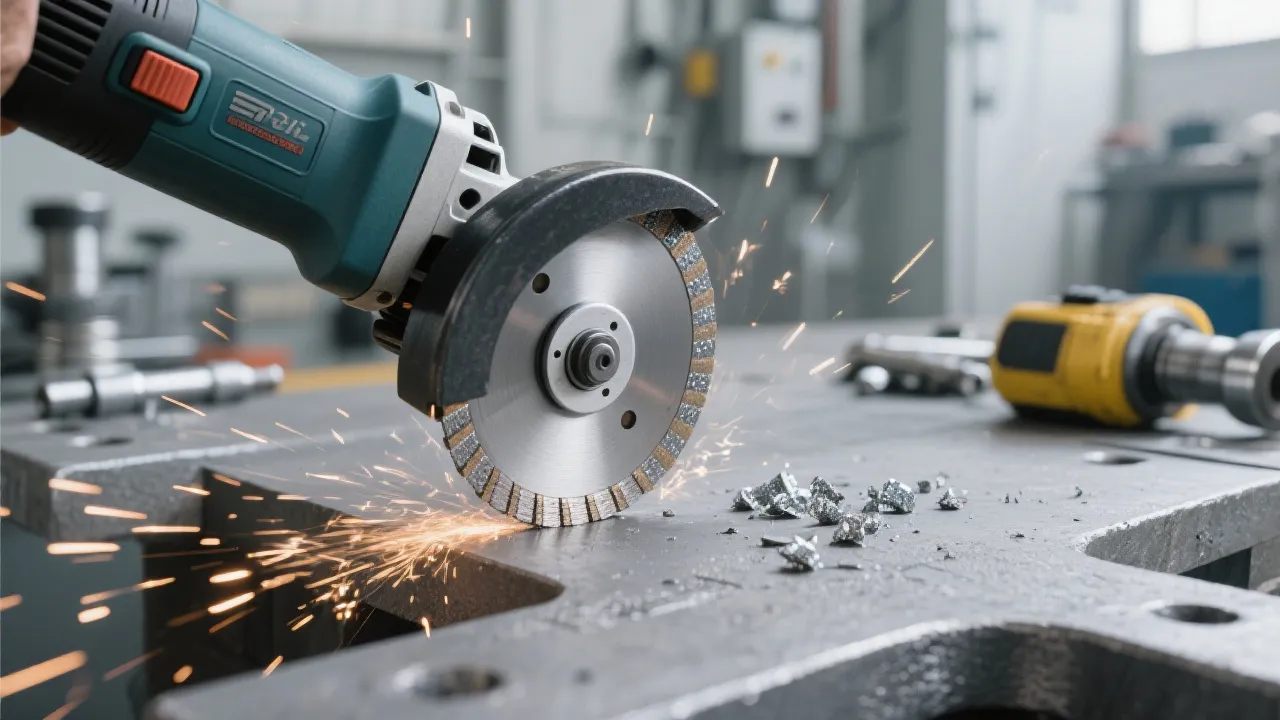
Selecting the right brazing technology is crucial for industries relying on superhard cutting tools, especially those processing stone, ceramics, and concrete. Vacuum brazing has emerged as a transformative technique that significantly enhances the wear resistance and operational lifespan of diamond cutting blades. Contrasted with traditional brazing, vacuum brazing offers distinct advantages by minimizing oxidation and optimizing metallurgical bonding, ultimately reducing downtime and comprehensive costs.
Vacuum brazing involves joining materials in a tightly controlled vacuum environment, typically under pressures lower than 10-3 Pa. This process prevents the formation of oxidation layers, which are common in traditional brazing conducted in atmospheric conditions. For diamond blades, this means a much cleaner join between the diamond particles and the metal matrix, significantly increasing bond strength and reducing microstructural defects.
In manufacturing superhard UHD (Ultra High Density) cutting tools, vacuum brazing enables precise control over filler metal composition and thermal profiles. Adjusting these parameters affects how brazing alloys infiltrate and bind ultra-hard particles, directly impacting the blade's durability and cutting precision.
Key to vacuum brazing’s success is selecting a filler alloy with optimal melting points and wetting characteristics to achieve maximum cohesion between the diamond segments and steel core. For example, nickel-based alloys enriched with small percentages of boron and silicon have shown to improve wettability and reduce interfacial stress.
Fine-tuning process parameters such as temperature ramp rates, dwell times, and vacuum levels leads to a consistent and uniform joint microstructure. This optimization yields an increase in diamond segment binding strength by up to 30% compared to traditional brazing, based on industry benchmark test data.
In field trials conducted at European construction sites and large-scale Southeast Asian stone fabrication yards, UHD diamond blades brazed using vacuum methods demonstrated a remarkable 25-40% lifespan improvement over traditionally brazed equivalents. Additionally, these blades exhibited up to a 15% reduction in sliding friction, contributing to lower energy consumption during operation.
Beyond wear resistance, vacuum brazed tools reduced unscheduled machine stops caused by blade failure by nearly 35%, significantly improving overall productivity. The cost savings realized through extended blade life and decreased maintenance validated the investment in vacuum brazing technology.
Traditional brazing often suffers from oxidation at joint interfaces, producing brittle oxide layers that weaken the bond and invite premature failure under heavy load. These defects reduce the usable life of cutting tools by 20–30% depending on material and machining conditions.
Vacuum brazing eliminates these oxidation issues and ensures homogeneous bonding, delivering superior mechanical strength and durability. The process also tightens quality control boundaries, resulting in consistently reliable product performance suited for the highly demanding industrial cutting applications.
UHD vacuum brazed diamond tools have been certified under CE standards, assuring compliance with stringent European safety and quality regulations. Their deployment ranges from concrete cutting in European urban developments to intricate ceramic processing in Southeast Asian manufacturing hubs.
Operators report improved cutting consistency with less vibration, equating to enhanced surface finish quality and fewer rejects. Economically, the longer tool life and reduced downtime translate into a 15-20% decrease in operational costs per project, making vacuum brazed UHD tools a vital investment for cost-conscious, quality-driven enterprises.
Your equipment downtime—how often is it linked to frequent blade wear? Discover the UHD difference and elevate your cutting tool reliability.
.png?x-oss-process=image/resize,h_1000,m_lfit/format,webp)
.png?x-oss-process=image/resize,h_1000,m_lfit/format,webp)