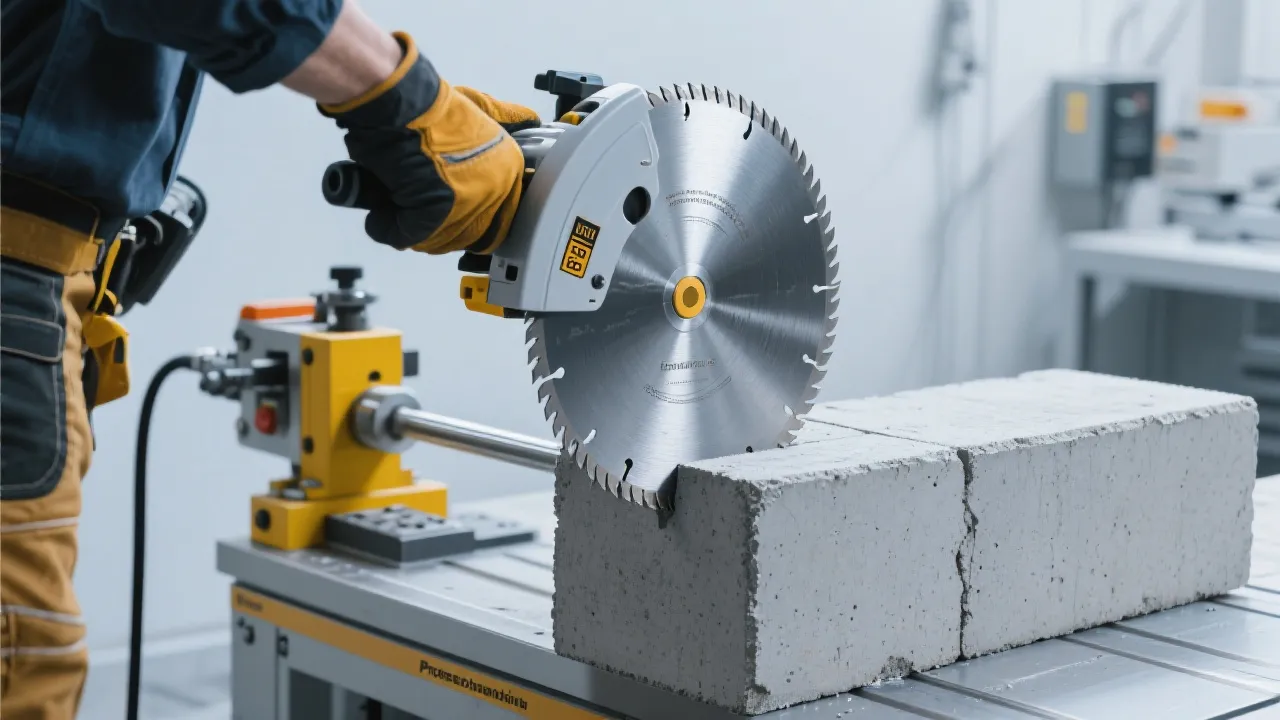
The advancement of vacuum brazing technology has revolutionized the manufacturing of diamond cutting blades, particularly in addressing the challenges associated with high-load industrial cutting applications. This article delves into the fundamental process principles, critical material selections, and optimized parameters that underpin vacuum brazing, driving enhanced bond strength between diamond particles and substrate matrices. The result is an industry-leading increase in blade wear resistance and operational lifespan, ultimately reducing downtime and cost for industrial operators.
Vacuum brazing is a process performed in a controlled vacuum environment, typically maintained between 10-3 to 10-5 Pa. Such stringent vacuum levels effectively eliminate oxidation and contamination during brazing, which is critical for preserving the structural integrity of both diamond abrasive grains and the steel or alloy substrate. Precise vacuum control also minimizes the formation of brittle intermetallic compounds, which can degrade the bonding interface.
State-of-the-art vacuum furnaces implement advanced pumping systems and temperature uniformity controls. Typical brazing cycles run at optimized temperatures in the range of 900°C to 1050°C, sufficiently above the melting point of the braze alloy but below the degradation threshold of diamond particles. This delicate thermal balance enhances metallurgical bonding while protecting the diamond’s microstructure.
The choice of the braze alloy is critical for the diamond-to-substrate adhesion. Typically, silver-copper alloys enriched with trace amounts of titanium or zirconium serve as active brazing agents. These elements chemically react with diamond surfaces, forming carbide layers that enhance mechanical interlocking.
Additionally, carrier materials—usually high-strength steels or iron-based alloys—must provide thermal expansion coefficients closely matched to the braze alloy to prevent residual stress-induced cracking during cooling. Specifications compliant with CE certification standards ensure consistent quality and predictable performance in demanding operational contexts.
Several critical parameters require rigorous optimization:
This process refinement yields diamond cutting blades with up to 30% improvement in bond strength compared to atmospheric brazing, verified through shear testing and metallographic analysis.
Vacuum brazed diamond cutting blades exhibit marked enhancements in durability and cutting efficiency. Empirical data from construction stone and reinforced concrete cutting operations report:
| Performance Metric | Vacuum Brazing | Traditional Brazing |
|---|---|---|
| Blade Lifespan (hours) | 120-150 | 75-90 |
| Cutting Speed (m/min) | 1.5 - 1.8 | 1.0 - 1.2 |
| Downtime Reduction (%) | 25%-35% | N/A |
These performance gains are directly tied to the reduction of sliding friction and compression damage at the diamond-substrate interface, a direct benefit from the high-quality metallurgical bond formed under vacuum conditions.
A leading ceramic tile manufacturer integrated vacuum brazed diamond blades into their production line, targeting enhanced precision while tackling high abrasion zones. Over a six-month evaluation, results included:
This case underscores vacuum brazing’s practical advantages, particularly when paired with rigorous compliance to CE production standards and collaborative R&D to tailor blade specifications.
To fully leverage the technology:
Incorporating these best practices ensures operational longevity and optimal cost-efficiency.
.png?x-oss-process=image/resize,h_1000,m_lfit/format,webp)


.png?x-oss-process=image/resize,h_1000,m_lfit/format,webp)