UHD High-Efficiency Heavy-Duty Cutting Blades: Features, Benefits, and Global Export Applications
03 02,2026
Product Comparison
This article provides an in-depth analysis of UHD high-efficiency heavy-duty cutting blades specialized for stone and concrete cutting. It covers blade selection techniques based on material hardness and equipment compatibility, operational best practices including cooling methods, speed control, and maintenance protocols to optimize blade longevity. Real-world international export cases highlight the product’s advantages, while common fault diagnosis and solutions aid in minimizing downtime and operational costs. Designed to enhance cutting efficiency and safety, this technical guide supports industrial managers and technicians in making informed decisions through data-driven insights and practical recommendations.

Introducing the UHD High-Efficiency Heavy-Duty Cutting Blade Series
In the demanding world of heavy-duty stone and concrete cutting, selecting the optimal cutting blade is crucial for operational excellence and cost efficiency. The UHD High-Efficiency Heavy-Duty Cutting Blades have been engineered specifically to meet these challenges, providing exceptional durability, precision, and performance. This article examines key selection criteria, operational best practices, and maintenance protocols critical for maximizing the lifespan and cutting efficiency of UHD blades. Supported by real-world international export case studies, it offers deep insights into troubleshooting common issues and highlights how adopting UHD technology enhances safety and reduces downtime.
Blade Selection: Matching Material Hardness With Blade Specifications
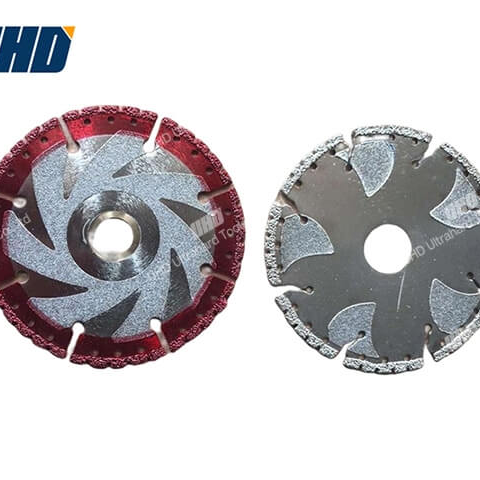
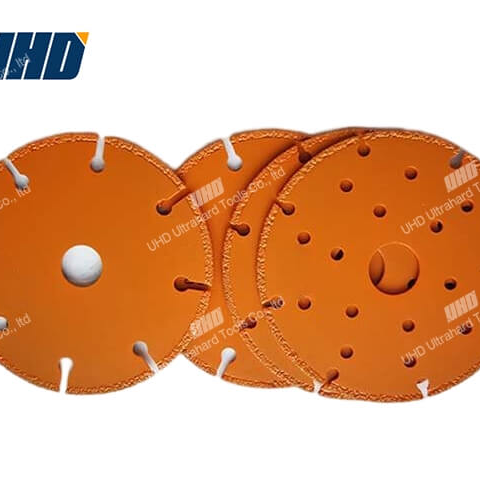
Correct blade selection is the foundation of efficient cutting operations. UHD blades are available with a variety of segment designs and diamond grain sizes specifically tailored for different materials and equipment specifications:
- Segment Design: Continuous rim segments are ideal for smooth cuts on granite and marble, while turbo and segmented rims are better suited for aggressive cuts in reinforced concrete and asphalt.
- Diamond Grit Size: Larger grit sizes (30–40 mesh) provide rapid material removal for softer concrete, whereas finer grits (60–80 mesh) ensure cleaner cuts in hard and dense stone.
Integrating equipment RPM and power output data with material hardness scales (Mohs hardness 6-7 for granite, 3-4 for limestone) facilitates blade specification choices that optimize cutting speed and blade life expectancy. For example, pairing a UHD blade with a 3500 RPM heavy-duty saw used on granite requires a turbo segment with 50 mesh diamonds for balanced throughput and wear resistance.
Operational Best Practices: Cooling Methods, Speed, and Feed Rate Control
Proper cooling and speed regulation are key variables influencing blade performance and safety:
- Cooling Technology: UHD blades support both wet and dry cutting. Wet cutting with continuous water flow reduces thermal stress, extending blade life up to 30% by minimizing segment overheating. Dry cutting is applicable for short interval operations with intermittent lowered feed speeds.
- Speed and Feed Rate: Maintaining blade RPM within the recommended 3000–4000 RPM range, coupled with feed rates adjusted between 0.5–1.2 meters per minute depending on blade type and material hardness, ensures optimized cutting performance while preventing premature wear or damage.
Adhering to these parameters reduces vibration and the risk of chipping, significantly enhancing operational safety on job sites.
Maintenance Protocol: Cleaning, Wear Monitoring, and Scheduled Servicing
Implementing a structured maintenance schedule is indispensable to achieve the promised longevity of UHD blades:
- Daily Cleaning: Post-shift removal of slurry and debris using non-abrasive brushes prevents clogging of diamond segments and maintains cutting efficiency.
- Wear Detection: Visual and tactile inspection for segment height reduction over 50% of original size triggers replacement before catastrophic failure.
- Periodic Sharpening: Controlled sharpening every 100 hours of use restores cutting surface quality, minimizing feed pressure and energy consumption.
Data collected from international projects show that factories applying these maintenance routines report up to a 25% extension in blade usable life and a 20% decrease in unplanned downtime.
Common Fault Diagnoses and Targeted Solutions
Diagnosing issues quickly reduces operational losses:
| Symptom |
Cause |
Recommended Action |
| Rapid segment wear |
Excessive feed rate or hard aggregate |
Reduce feed rate; select coarser diamond grit |
| Overheating & blade warping |
Insufficient cooling or excessive RPM |
Increase water flow; adjust RPM within specs |
| Blade chipping or cracks |
Vibration or impact loading |
Check machine stability; avoid sudden impacts |

Global Export Success Stories: UHD Blade in Action
UHD blades have proven their mettle across multiple regions and construction sectors:
- Middle East Infrastructure Project: UHD blades sustained continuous cutting of reinforced concrete in a metro-line construction, reducing blade replacements by 30% compared to industry averages.
- European Stone Fabrication Facilities: Fabricators reported a 15% improvement in cut precision with UHD turbo blades, facilitating higher end-product quality and reducing rework rates.
- North American Road Maintenance Operations: Operators praised UHD segmented blades for their superior heat dissipation and durability under prolonged dry cutting scenarios.


.png?x-oss-process=image/resize,h_1000,m_lfit/format,webp)