
Why do some diamond saw blades produce unbearable noise and violent vibrations during stone cutting? The answer lies not just in the blade itself—but in how its components work together under real-world stress.
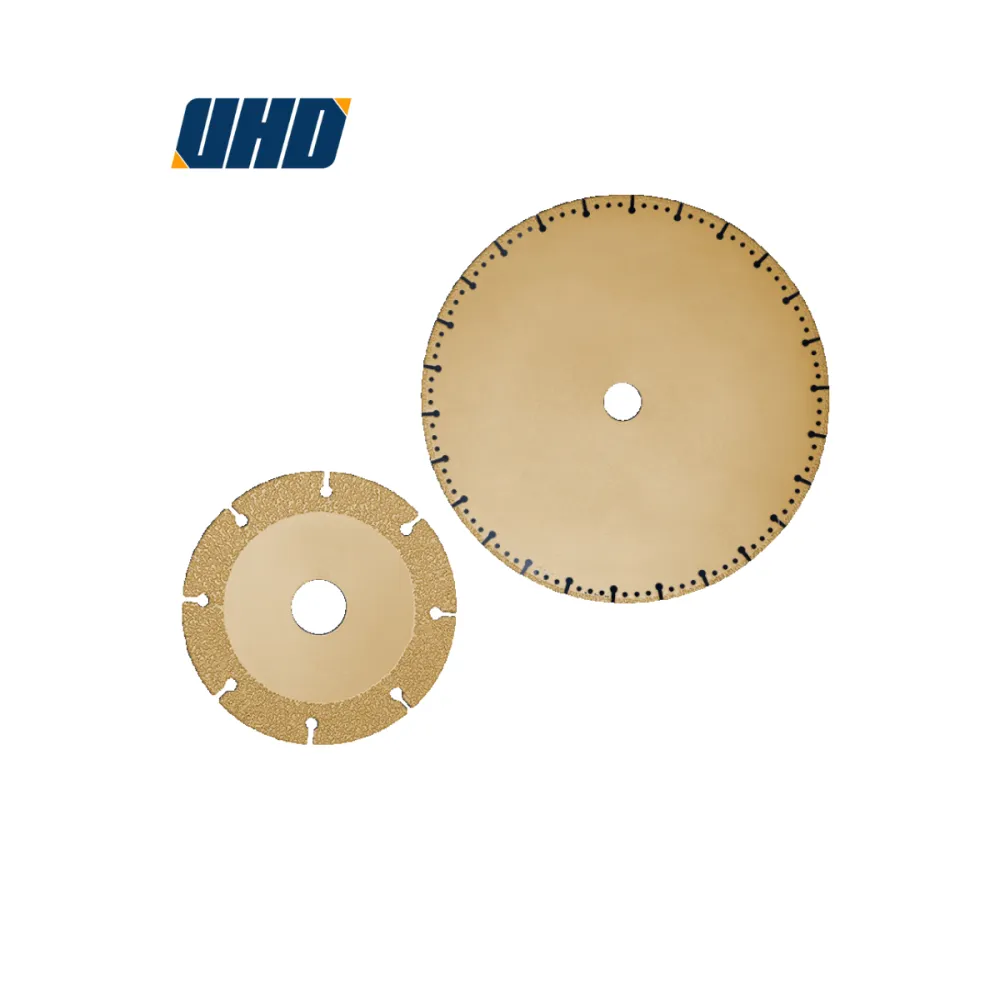
In a recent field test at a granite quarry in Turkey, operators reported that older-style blades caused up to 40% more vibration than modern 400H钎焊金刚石锯片—leading to fatigue, reduced precision, and frequent blade replacements. But when engineers adjusted the tooth arrangement pattern and switched to high-strength alloy steel bases, vibration dropped by nearly 35%, while cutting efficiency increased by 22%.
Most noise comes from mechanical resonance—a condition where blade rotation frequency matches natural frequencies of the machine or material. A study conducted by the University of Stuttgart found that unbalanced tooth spacing can amplify vibration amplitudes by as much as 60% at certain RPMs.
“We used to change blades every two days because they’d shake so badly we couldn’t trust the cut. Now with the new design, we run for five days straight without issues.” — Ahmed Hassan, Senior Stone Cutter, Dubai Construction Co.
Engineers now use computational modeling to optimize tooth density, angle, and spacing—not just for cutting speed, but for vibration damping. For example:
While high-carbon steel offers rigidity, it transmits vibration easily. In contrast, cast iron with controlled carbon content absorbs energy better—especially when combined with surface treatments like shot peening. Field data shows that blades made with alloy steel + heat-treated base plates last 2.5x longer under heavy-duty conditions.
A poor brazing process introduces micro-cracks and residual stresses—major contributors to premature failure. Modern techniques use laser-assisted brazing with precise temperature control (±5°C), ensuring uniform bonding across all teeth. This reduces thermal distortion by up to 70%, according to tests published in the International Journal of Advanced Manufacturing Technology.
Pro Tip for Operators: If you hear a "buzzing" sound instead of a smooth hum—or feel unusual shaking—even after tightening the clamps—it’s likely an early sign of misalignment or blade fatigue. Stop immediately and inspect the mounting system. A stable setup extends blade life by up to 40%.
Whether you're working on marble countertops or concrete demolition, understanding these principles helps turn technical specs into practical wins on-site.


.png?x-oss-process=image/resize,h_1000,m_lfit/format,webp)

 <#else>


