
In the field of stone processing and construction cutting, the noise and vibration of saw blades can have a significant impact, not only affecting the comfort of workers but also directly related to operational efficiency and equipment lifespan. Let's explore how to optimize these factors and create a quieter, more stable, and efficient cutting experience.
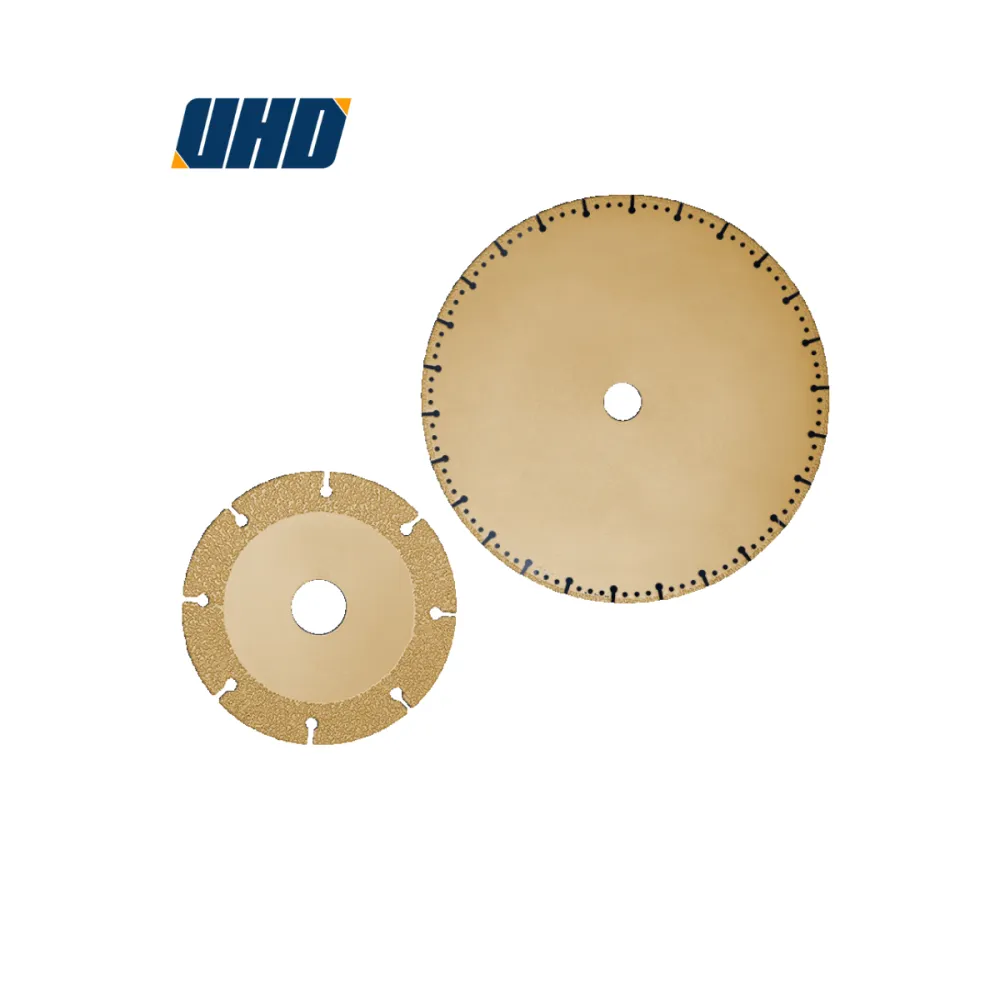
The design of a saw blade plays a crucial role in reducing noise and vibration. There are three key technical points to consider: the arrangement of the cutting segments, the characteristics of the blade matrix material, and the control of the brazing process.
Imagine the segments of a saw blade as piano keys. Just as the precise arrangement of piano keys creates beautiful music, the optimized arrangement of saw blade segments can significantly reduce mechanical disturbance. A well - arranged segment pattern can distribute the cutting force evenly, minimizing the vibration caused by uneven stress. For example, a specific segment arrangement can reduce vibration by up to 30% compared to a standard arrangement.
The choice of matrix material is also vital. A high - quality matrix material with appropriate hardness and toughness can better withstand the forces during cutting. For instance, a matrix material with a certain level of elasticity can absorb part of the cutting energy, reducing vibration. The right material can also improve the overall durability of the saw blade, extending its service life.
The brazing process is the key to ensuring a strong connection between the segments and the matrix. A precise brazing process can guarantee that each segment is firmly attached to the matrix, preventing segment detachment and reducing abnormal vibrations. Through advanced brazing technology, the vibration value can be controlled within a relatively stable range, usually reducing the vibration amplitude by about 20 - 25%.
In different working conditions, such as the precise cutting in a stone factory and the rough operation on a construction site, the coordination between the saw blade's rotational speed and feed rate is crucial.
In a stone factory where precision is required, a lower feed rate combined with an appropriate rotational speed can ensure a smooth and accurate cut. For example, when cutting high - hardness granite, a rotational speed of around 3000 - 3500 RPM and a feed rate of 0.5 - 1 m/min can achieve good results. This combination can reduce the load on the saw blade and improve the cutting quality.
On a construction site, where the cutting task is more about efficiency, a higher feed rate can be used, but the rotational speed also needs to be adjusted accordingly. For example, when cutting common building stones, a rotational speed of 3500 - 4000 RPM and a feed rate of 1 - 2 m/min can be adopted. However, it is important to note that too high a feed rate may cause excessive wear on the saw blade or even damage it.
Let's hear from Zhang, a front - line worker with years of experience in stone cutting. "I've been doing this job for a long time, and the noise and vibration of the saw blade used to really bother me. But since we started using saw blades with optimized designs, the situation has improved a lot. The cutting is smoother, and I don't feel as tired at the end of the day," Zhang said. His experience reflects the practical benefits of optimizing saw blade design and cutting parameters.
Here are some practical tips for you. First, you can learn to identify abnormal vibration by listening. If you hear a rattling or uneven sound during cutting, it may indicate abnormal vibration. You should stop the operation immediately and check the saw blade and the cutting equipment.
Second, adjusting the stability of the fixture can effectively extend the life of the saw blade. A loose fixture can cause the saw blade to vibrate abnormally during cutting, accelerating wear. Make sure the fixture is tightened properly before each use.
You may wonder if you've encountered similar problems? Leave a message below and share your experiences. If you want to learn more about saw blade optimization details, click here to enter our technical column.

.png?x-oss-process=image/resize,h_1000,m_lfit/format,webp)


 <#else>


