.png?x-oss-process=image/resize,h_1000,m_lfit/format,webp)
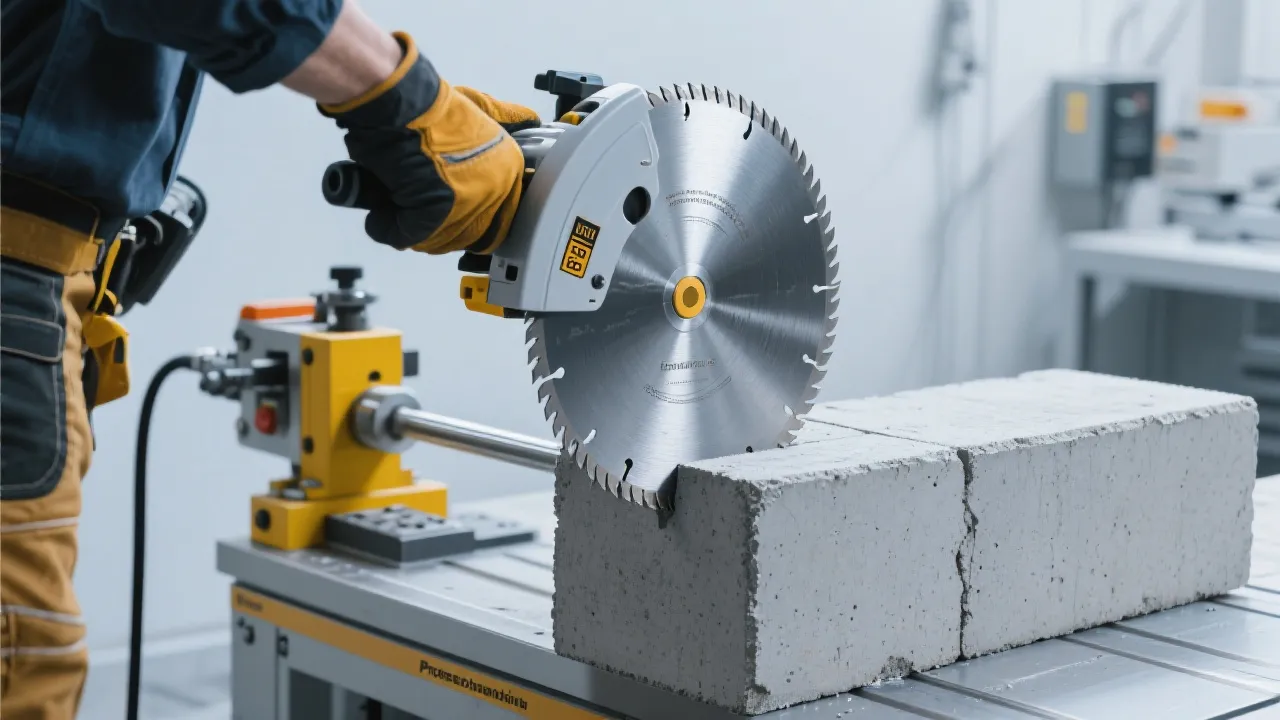
When cutting hard materials like porcelain tile, granite, engineered stone, or cured concrete, edge chipping is one of the most common quality killers on site. It doesn’t just ruin the finish—chips often lead to rework, wasted material, and damaged blades. The good news: chipping is rarely “bad luck.” In most cases, it’s the predictable outcome of stress, heat, vibration, and a blade that is no longer cutting cleanly.
Hard materials fail differently from soft ones. Instead of deforming, they crack. During cutting, the blade introduces localized tensile stress ahead of the cutting edge. If that stress spikes above the material’s fracture threshold—especially near the exit edge—microcracks propagate and “pop” the corner, creating a chip.
.png)
Many hard materials contain residual stress from firing (porcelain), curing (concrete), or fabrication (engineered stone). Cutting opens a new boundary and forces stress to redistribute. If the cut is unstable—speed changes, blade bounce, poor clamping—microcracks grow faster and become visible chips.
As diamond exposure reduces or the metal matrix smears, the blade stops “cutting” and starts rubbing. Rubbing raises temperature, increases vibration, and spikes fracture stress at the edge. On dense porcelain and granite, glazing can happen quickly if the blade spec is too soft/hard for the material.
Chipping frequently comes from feed surges, not average feed speed. A stable feed keeps the cutting force consistent. Surges create sudden force peaks, which brittle materials respond to by cracking. In controlled field tests across tile cutting setups, stabilizing feed often reduces visible edge chipping by 30–60% versus “hand-feel” pushing.
Higher RPM can improve finish, but only if the blade is sharp and cooling is adequate. If RPM is high and feed is slow, friction dominates and heat climbs. If feed is high and RPM is low, the blade impacts rather than slices—more vibration and more chips. For many wet saw applications on porcelain, crews typically operate around 3,500–6,000 RPM depending on diameter and machine design, then tune feed to keep the motor from bogging.
Water does three jobs: cooling, flushing fines, and reducing friction. If the water stream is weak, misaligned, or clogged, the kerf packs with abrasive sludge. That increases side pressure and makes the blade wander—an easy path to edge breakout. A practical target is a continuous, clean flow that keeps the cut line visibly wet; many jobsite wet saws run effectively at roughly 1–3 L/min depending on kerf and material.
Even a good blade can’t compensate for a wobbly setup. Common culprits: worn arbor, bent flange, damaged bearings, uneven table rollers, or cutting unsupported offcuts. The exit edge is where the remaining cross-section is smallest, so it fractures easiest—support and stability matter most in the last 10–20 mm of travel.
Porcelain glaze can be extremely hard and brittle; granite can contain quartz-rich zones that behave like tiny anvils; cured concrete may expose large aggregate that “catches” the segment. The more heterogeneous the material, the more valuable a blade with stable segment integrity and consistent diamond exposure becomes.
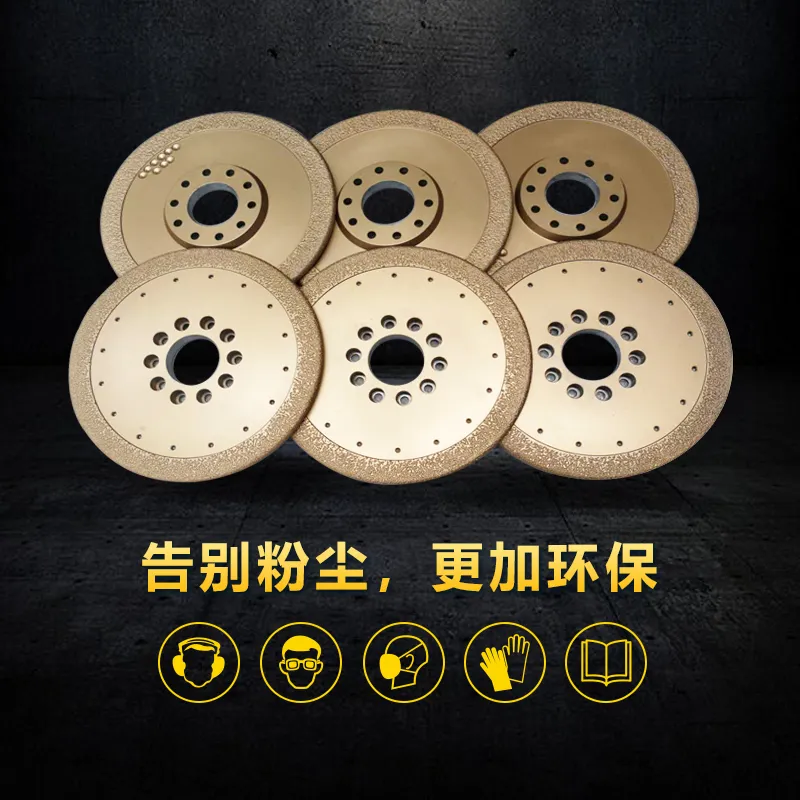
For hard materials, the priority is not “more diamonds”—it’s usable diamonds with stable bonding and segment structure that stays sharp under load. High-wear applications (dense porcelain, granite, reinforced concrete) often benefit from brazed diamond technology because it can deliver aggressive initial bite and efficient chip removal when matched correctly to the task.
A simple rule crews remember: steady sound = steady cut. If motor tone surges, the feed is surging. On repeated cuts, a consistent feed typically improves edge finish measurably and reduces blade overheating. If the machine allows, use guided rails or a feed support to keep pressure consistent.
Aim water toward both sides of the segment and into the kerf. Keep nozzles clean, confirm flow before every run, and flush the tray so abrasive fines don’t recirculate. If wet cutting isn’t possible, use appropriate dust extraction and take shorter passes to control heat buildup.
On high-gloss porcelain or brittle stone finishes, a shallow initial pass (a controlled “score”) can reduce breakout by limiting the initial crack path. Then complete the cut with a full-depth pass at a steady feed.
Prevent the offcut from dropping or vibrating in the final seconds. When possible, clamp both sides, use sacrificial backing, or adjust the cutting direction so the most visible edge is not the exit edge.

A blade can look “fine” and still cause chipping. Use the checklist below before blaming the material or the operator.
| What You See | Likely Cause | What to Do Next |
|---|---|---|
| Burning smell / dark cut marks | Glazing, low water flow, wrong RPM/feed | Increase cooling, stabilize feed, dress the blade |
| More chipping at exit edge | Offcut vibration, feed surge at finish | Support offcut, slow last 20 mm, consider score pass |
| Blade “walks” or cut line wanders | Runout, uneven wear, packed kerf | Check arbor/flange, clean slurry, verify blade mounting |
| Slow cutting despite high pressure | Dull segment or wrong bond for material | Dress on abrasive block; if unchanged, replace/spec-change |
| High vibration / noisy cut | Damaged blade, bent core, bearing issues | Stop and inspect; replace blade or service the saw |
On a renovation project cutting dense porcelain slabs, a crew reported frequent exit-edge chips and occasional burn marks. The setup was typical: wet saw, standard diamond blade, hand-fed. The issue wasn’t “operator skill” as much as process instability.
The practical outcome: cleaner edges, fewer rejects, and more predictable cycle time. In many teams’ logs, reducing re-cuts by even 10–15% can free hours per week on mid-sized jobs—especially when cuts are repetitive.

Different crews struggle with different “chip-makers”—porcelain corners, granite veins, or concrete aggregate. If you share the material type, blade diameter, and whether you cut wet or dry, it becomes much easier to pinpoint whether the fix is blade spec, cooling, feed control, or machine stability.
If your team is cutting dense porcelain, granite, or concrete all day and edge quality can’t be a guessing game, it’s worth looking at a blade engineered for heavy-duty wear and stable cutting performance.
Explore the 400H heavy-duty brazed diamond saw blade for jobsitesPractical specs, recommended applications, and operating tips are included on the product page to help you match the blade to your material and cutting method.


.png?x-oss-process=image/resize,h_1000,m_lfit/format,webp)