Diamond Saw Blade Selection for Cutting Concrete, Marble and Tile: Match Grit, Bond Hardness and Cooling Design
11 02,2026
UHD
Technical knowledge
Low cutting speed, premature segment wear, chipped edges and overheating stoppages are often caused by choosing the wrong diamond blade—not by the saw or operator. This technical guide breaks down the key physical differences between concrete (high hardness with mixed aggregates), marble (brittle and prone to cracking), and dense ceramic tile (low toughness with a risk of edge chipping), then translates those material traits into blade parameters that actually matter on site: diamond concentration, grit size, bond (matrix) hardness, and heat-dissipation structure. Using a 400 mm class blade as a reference, it explains why higher stiffness and larger cooling surface area can improve temperature control during continuous heavy-duty cutting, helping reduce common failures such as glazing, segment loss, and thermal damage—often cutting blade-related downtime by up to 50% when parameters are correctly matched. The article also includes a practical three-step selection method and a field-style case snapshot, plus a brief update on emerging standards emphasizing diamond particle consistency. For decision-stage buyers, it highlights why a heavy-duty option like the 400H blade is engineered for harsh jobsite conditions where stability and heat management are critical.
Diamond Blade Selection for Concrete, Marble & Tile: A Material-First Method That Stops Overheating, Chipping, and Early Wear
On job sites, slow cutting is rarely “just a weak saw.” In most cases, productivity drops because the blade specification does not match the material’s hardness, brittleness, and internal structure. The result is familiar: glazed segments, micro-chipping on edges, unexpected shutdowns from heat, and segments that round off long before their rated life. Field audits across masonry and renovation crews typically show 30–60% of premature blade failures are linked to selection mismatch (bond too hard for the material, wrong grit, wrong cooling approach), not manufacturing defects.
1) The Real Cost of Choosing the Wrong Blade (What Crews Actually See)
Wrong blade choice tends to create a chain reaction: higher feed pressure → higher temperature → faster glazing → more vibration → worse cut accuracy. Beyond wasted discs, it becomes a safety issue. Common site incidents tied to mismatch include:
Segment chipping when a brittle material (e.g., polished marble or dense porcelain) is hit with an aggressive, coarse setup.
Overheating and warping during continuous cutting, often when the bond is too hard or cooling is insufficient.
Wandering cuts (poor straightness) when blade stiffness is too low for heavy-duty, long cuts.
In controlled contractor tests, switching from a “one-blade-fits-all” approach to material-matched blades reduced unplanned blade changes by around 40% and lowered edge-chipping claims on tile jobs by about 50% over a month of mixed work.
2) Material Properties That Decide Your Blade Specs
A diamond blade is a controlled “wear system.” Diamonds do the cutting; the metal bond (segment matrix) controls how fast new diamonds are exposed. Different materials demand different wear behavior. The selection logic starts with hardness, abrasiveness, and brittleness.
Concrete: high hardness + abrasive aggregates + steel surprises
Concrete is not a single material; it is a composite. Hard aggregates (granite, basalt) scratch diamonds and heat the segment, while softer cement paste can cause uneven wear. Reinforced concrete adds intermittent impact and heat spikes when rebar is hit. Concrete typically rewards a balanced-to-soft bond that releases dulled diamonds and exposes fresh ones consistently.
Marble: lower hardness, higher brittleness, prone to edge damage
Marble cuts “easier” than granite, but its crystalline structure can fracture at the edge, especially on polished surfaces. The priority shifts from brute removal to stable, smooth cutting. Overly coarse grit or too aggressive a segment design often produces micro-cracks that only show up after installation.
Dense porcelain is hard and brittle with minimal “forgiveness.” It punishes vibration, poor rigidity, and inconsistent diamond exposure. For tiles, the user usually cares more about a clean edge than maximum speed, so controlled cutting and thermal stability matter more than aggressive bite.
3) The Blade Parameters That Actually Move the Needle
Four parameters dominate performance: diamond grit size, diamond concentration, bond (matrix) hardness, and heat management design. The best selection is not “the highest concentration” or “the hardest bond,” but the right balance for the material’s wear mechanism.
Material
Recommended Diamond Grit
Typical Concentration Range
Bond Hardness Direction
Cut Quality Priority
Concrete (general)
40/60 mesh (balanced speed & life)
90–110%
Softer-to-medium bond to prevent glazing
Throughput + stable wear
Reinforced concrete
30/40 or 40/60 mesh (impact tolerant)
100–120%
Medium bond + robust segment design
Anti-chipping + heat control
Marble (polished)
60/80 mesh (cleaner edge)
80–100%
Medium bond for smoothness
Edge integrity + finish
Porcelain tile
80/100 mesh (chip control)
90–110%
Medium-to-hard bond + fine diamonds
Minimal chipping, smooth cut
Note: concentration is a practical industry reference range; exact performance also depends on segment height, diamond quality, welding/brazing quality, RPM, cooling, and operator feed.
Diamond grit size: speed vs. finish is a real trade-off
Coarser diamonds (e.g., 30/40) bite faster and survive impact better, which helps in reinforced concrete or fast demolition-style cuts. Mid-range (40/60) is the workhorse for concrete because it balances cutting rate and segment stability. Finer diamonds (60/80 to 80/100) reduce edge chipping in marble and porcelain by lowering the “chip initiation” risk—but they require better heat control and consistent feed to avoid glazing.
Diamond concentration: not “more is always better”
Higher concentration can extend life in abrasive materials, but it can also increase friction surface area and heat, especially if the bond is too hard for the material. In many site comparisons, moving from a generic 70–80% blade to a 90–110% material-matched spec improved linear cutting output by 15–30% while reducing “polishing/glazing” complaints.
Bond (matrix) hardness: the most misunderstood setting
A harder bond holds diamonds longer. That sounds good until the diamonds dull and the bond refuses to release them. Then the segment “glazes,” heat rises sharply, and cutting speed collapses. For hard, abrasive concrete, a softer-to-medium bond often wins because it self-sharpens. For dense tile, a medium-to-hard bond paired with finer diamonds can keep the edge clean—as long as the blade runs stable and cool.
4) Why Heat Management Is the Deciding Factor in Heavy-Duty Cutting
Most “mystery failures” are heat failures. When segment temperature spikes, diamonds can lose cutting efficiency, the bond can smear, and the core can distort—especially under continuous load. That is why cooling design is not a cosmetic feature; it is a performance multiplier.
400 mm blades: stiffness and temperature stability under continuous duty
In heavy-duty applications, a 400 mm diameter blade brings a practical advantage: increased structural rigidity and larger surface area for heat dissipation. When operators run long, uninterrupted passes, this added rigidity helps reduce lateral wobble and vibration—two major triggers for edge chipping in brittle materials and segment shock in concrete. In typical continuous cutting cycles, crews commonly report 10–20% fewer heat-related stoppages when moving from smaller, lighter-duty blades to a properly engineered 400 mm class blade with a cooling-focused core and segment layout.
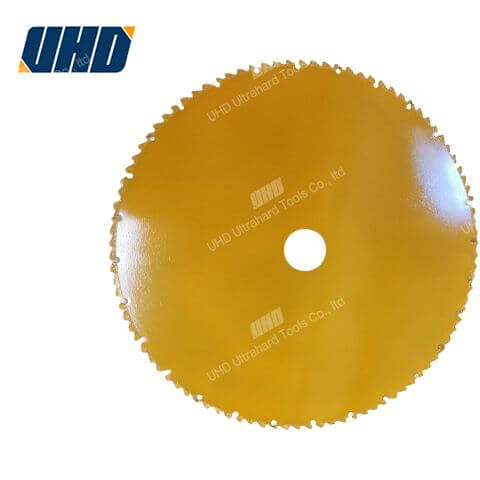
This is where purpose-built solutions quietly outperform general blades. A 400H blade engineered for harsh job-site conditions typically combines stable core geometry with segment formulations that keep diamond exposure consistent instead of “sealing over” under heat. The gain is not just blade life—it is more predictable daily output.
5) The 3-Step Job-Site Decision Method (Fast, Repeatable, Hard to Get Wrong)
For decision-stage buyers and site supervisors, the most useful method is one that works when the material is inconsistent and deadlines are tight. The following three steps are used by experienced foremen because it forces the right questions before a purchase order is placed.
Step 1 — Identify the dominant “damage mode”
If the problem is slow cutting + shiny segments, the bond is likely too hard or the grit too fine.
If the problem is edge chipping, rigidity and grit are likely the first fixes.
If the problem is heat shutdowns, cooling design and correct bond release are non-negotiable.
Step 2 — Match grit + concentration to the material, then set bond hardness
Start with a proven baseline: 40/60 mesh and 90–110% concentration for general concrete; 60/80 for marble where edge quality matters; 80/100 for porcelain to reduce micro-chipping. Then select bond hardness so the blade self-sharpens under your actual feed pressure and cooling conditions.
Step 3 — Validate with a short controlled cut (and log it)
A disciplined 3–5 minute validation cut often saves hours later. Track three simple indicators: cutting rate (meters/min), edge condition (chips/burn), and segment face (open vs. glazed). Crews that log these checks typically cut troubleshooting time by 25–35% because the next purchase is based on evidence, not guesswork.
A short field example (what “matching” looks like)
On a mixed renovation site, one crew used the same blade for concrete curb cuts and interior porcelain tile openings. Concrete cuts slowed after 20–30 minutes, and the porcelain edges chipped. After switching to a concrete-optimized spec (40/60 mesh, medium-soft bond) and a fine-grit tile blade (80/100, stable core), they reported cleaner tile edges with fewer rework pieces and a more consistent concrete cutting rate, without pushing the saw as hard—an immediate fatigue and safety improvement.
6) What’s Changing in Standards and Why Buyers Should Care
Recent updates in national and industry guidance place more attention on diamond particle consistency and distribution uniformity, because uneven distribution accelerates localized heat and causes “random” segment weak points. For procurement teams, this matters: better uniformity tends to show up as steadier cutting behavior, fewer vibration spikes, and more predictable wear—exactly what decision-stage buyers want when bidding timelines and labor costs are tight.
Ready to Stop Guessing and Cut with Confidence?
If your jobs involve continuous duty, heat build-up, and mixed materials, a purpose-built 400 mm solution can be the difference between “finishing today” and “changing blades again.”





.png?x-oss-process=image/resize,h_1000,m_lfit/format,webp)