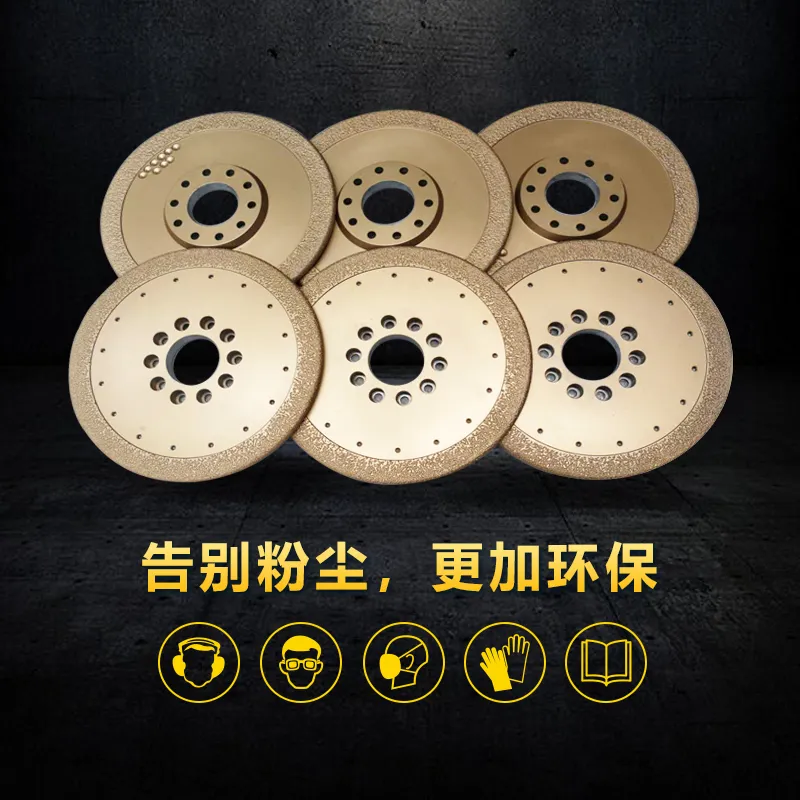
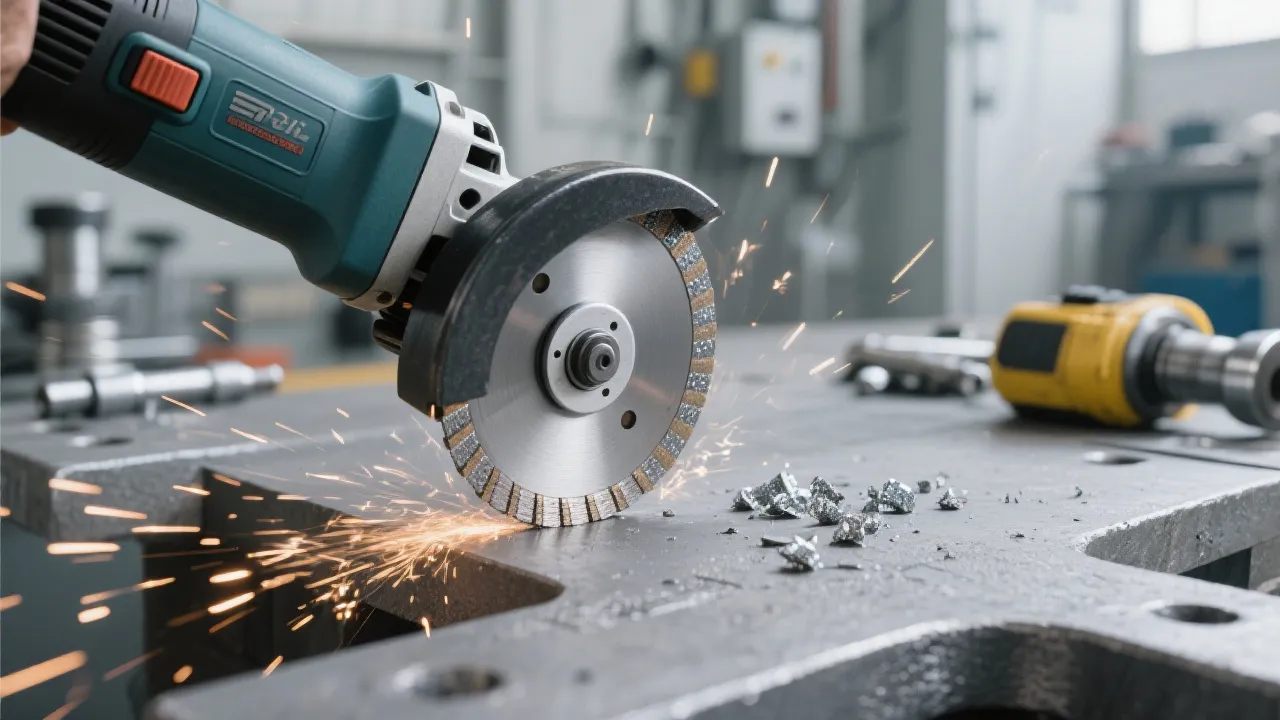
In the field of concrete cutting, the choice of cooling method significantly impacts the performance of cutting tools, especially diamond blades. This article aims to provide a comprehensive comparison between water cooling and air cooling, offering practical insights for on - site managers and technical operators to enhance the professional level and production efficiency of concrete cutting processes.
Water cooling has long been a popular choice in concrete cutting. According to our test data, in continuous cutting operations, water cooling can reduce the blade temperature by up to 60% compared to non - cooled cutting. This significant temperature reduction effectively enhances the blade's wear resistance. For example, in a large - scale building demolition project, using water cooling, the diamond blade's service life was extended by about 30% compared to air cooling. However, water cooling also has its limitations. It requires a continuous water supply, which can be a challenge in some remote construction sites. Moreover, the wastewater generated may cause environmental pollution if not properly treated.

On the other hand, air cooling is a more flexible option. It does not require a water source, making it suitable for various working environments. In small - scale concrete cutting tasks, air cooling can quickly dissipate heat from the blade surface. But air cooling has relatively lower cooling efficiency. In high - intensity cutting operations, the blade temperature may still rise rapidly, which can lead to reduced blade performance and shorter service life. For instance, in a high - rise building renovation project, when using air cooling for long - time cutting, the blade needed to be replaced 20% more frequently than when using water cooling.
The cooling effect directly affects the blade's performance and life. A well - cooled blade can maintain its sharpness and cutting efficiency for a longer time. When the blade temperature is controlled within a reasonable range, the diamond particles on the blade surface are less likely to fall off, thus extending the blade's service life. Our test shows that for a diamond blade with a diameter of 300mm, under water cooling, it can cut up to 500 square meters of concrete before significant wear, while under air cooling, the cutting area is only about 350 square meters.
To maximize the blade's performance and life, it is crucial to select the appropriate blade and cooling method. When cutting hard - textured concrete, a blade with a larger diamond particle size and a suitable blade edge shape should be chosen. At the same time, the cutting speed and feed rate also need to be optimized. For example, when using water cooling, a slightly higher feed rate can be adopted, while for air cooling, a lower feed rate is recommended to avoid overheating the blade.
When selecting a blade, the particle size and blade edge shape should be matched according to the cutting material and requirements. For heavy - duty concrete cutting, a blade with a larger particle size can provide stronger cutting ability. In terms of blade edge shape, a segmented blade is more suitable for high - speed cutting, while a continuous - rim blade is better for smooth cutting surfaces. Additionally, the rotation speed and feed rate should be adjusted according to the cooling method. Generally, for water cooling, the rotation speed can be increased by about 10% compared to air cooling to improve cutting efficiency.
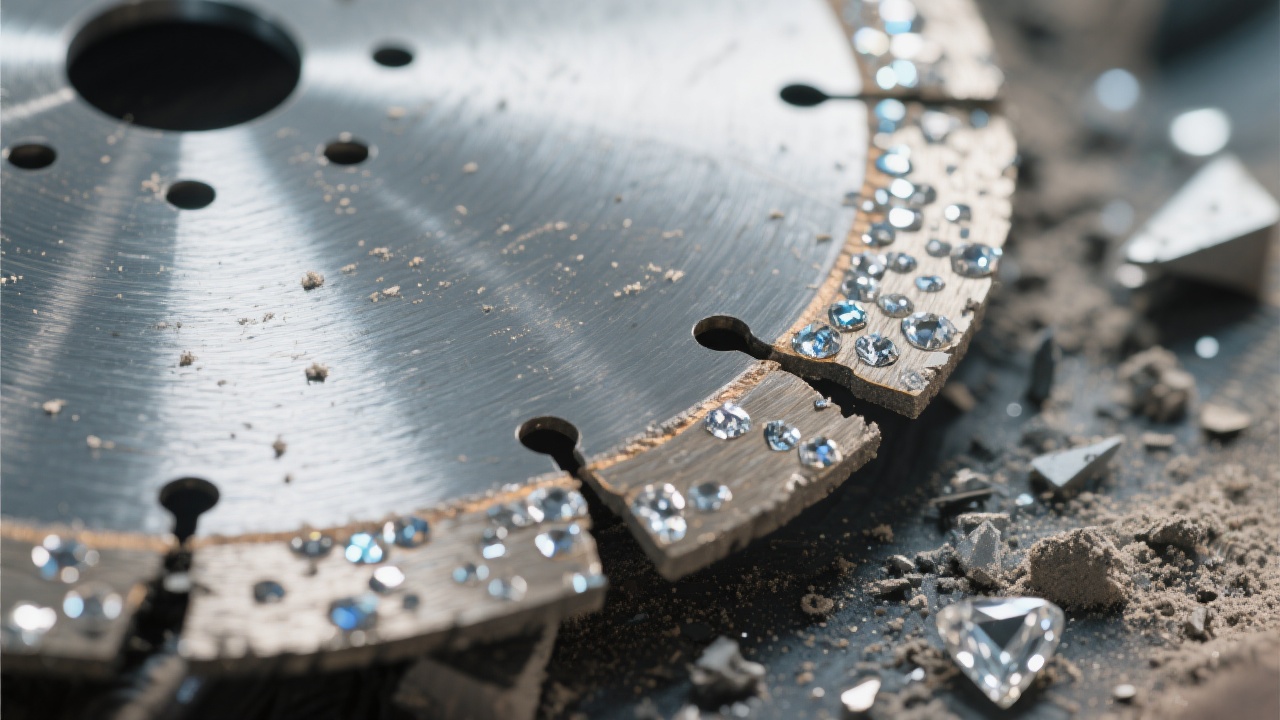
Our company's UHD products have significant customization advantages. We can customize the blade's particle size, edge shape, and other parameters according to different customer needs, ensuring high - precision cutting in various concrete cutting scenarios. With a high on - time delivery rate, we can quickly respond to customers' urgent needs, providing reliable technical support and after - sales service.
Regular maintenance is essential for extending the blade's life and reducing operating costs. After each cutting operation, the blade should be cleaned to remove concrete residues. For water - cooled blades, the water supply system should be checked regularly to ensure normal water flow. For air - cooled blades, the air duct should be inspected to prevent blockages.
Common problems in concrete cutting include blade wear, uneven cutting, and abnormal noise. Through our long - term experience, we have summarized a set of effective fault diagnosis methods. For example, if the blade is worn unevenly, it may be caused by improper installation or an unbalanced cutting load. By adjusting the installation position or reducing the feed rate, the problem can often be solved.
.png)
Q: Which cooling method is more suitable for continuous large - area concrete cutting?
A: Water cooling is generally more suitable. It can effectively control the blade temperature and improve cutting efficiency and blade life.
Q: How to choose the right blade for different concrete hardness?
A: For harder concrete, choose a blade with a larger diamond particle size and a more robust edge shape. Our technical team can provide detailed selection advice based on specific concrete hardness data.
Interested in improving your concrete cutting efficiency? Explore our UHD product customization services and experience the high - quality technical support and service response of our brand. Click here to learn more
.png?x-oss-process=image/resize,h_1000,m_lfit/format,webp)