The Secret to Efficient and Quiet Cutting: Optimizing 400mm Diamond Saw Blade Parameters and Speed-Feed Coordination
20 12,2025
Application Tutorial
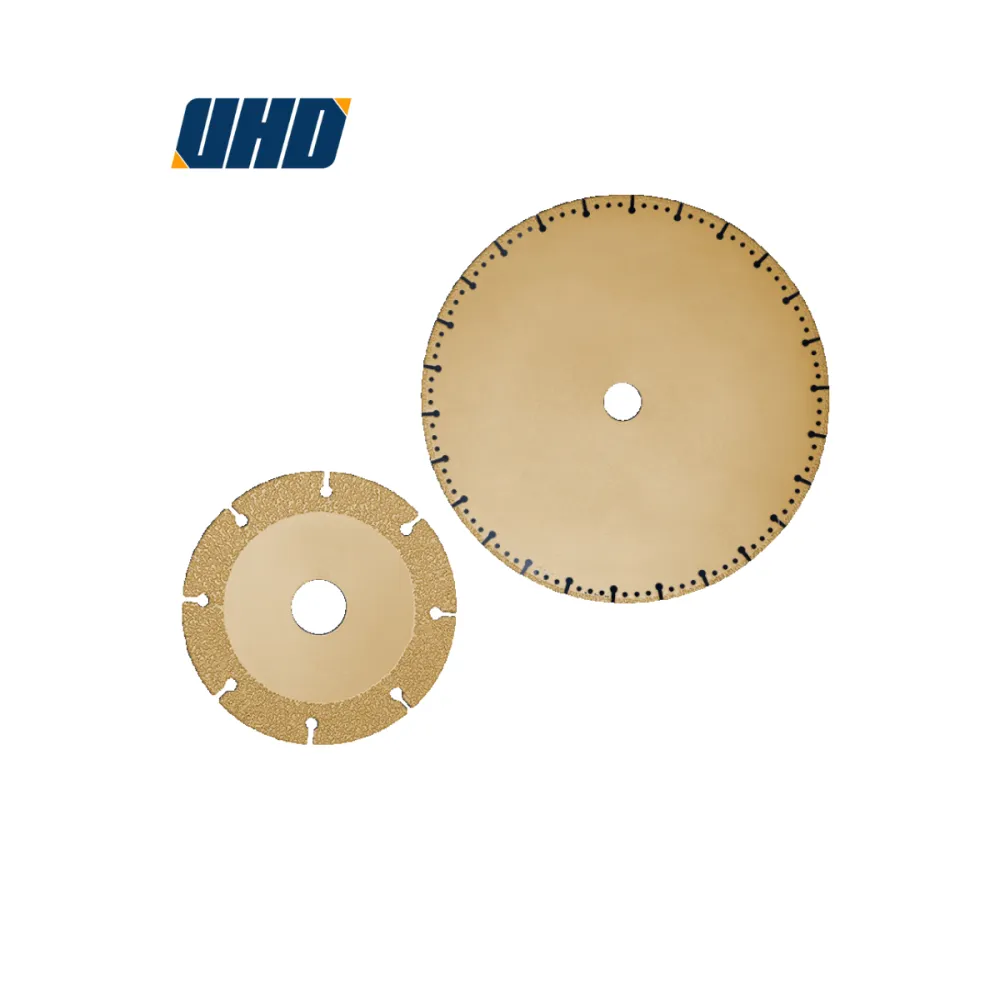
This article uncovers the technical secrets behind efficient and low-noise cutting using 400mm brazed diamond saw blades. By optimizing segment arrangement, blade body material compatibility, and brazing process control, noise and vibration during operation are significantly reduced. Real-world case studies from construction sites and stone fabrication facilities illustrate how proper spindle speed and feed rate settings can balance cutting efficiency with operator comfort. Practical tips for identifying abnormal vibrations and adjusting clamping stability are included to extend blade life and improve cut quality. Supported by vibration spectrum comparisons, cross-sectional diagrams, and frontline worker insights, this guide transforms theory into actionable on-site practices—enabling quieter, more stable, and productive operations.
How to Cut Quietly and Efficiently: Optimizing 400mm Diamond Saw Blade Parameters
For construction teams and stone fabricators, noise and vibration from diamond saw blades aren’t just annoying—they’re productivity killers. In fact, studies show that excessive blade vibration can reduce cutting efficiency by up to 25% while increasing wear on both tools and equipment.
The Real Secret? It’s Not Just the Blade—It’s How You Use It
Take a look at this typical case from a marble fabrication plant in Italy: operators were reporting high-frequency chatter during wet-cutting of granite slabs using standard 400mm brazed diamond blades. After analyzing their setup, we found two key issues:
- Blade RPM was set too high (3,200 rpm) for the material hardness.
- Feed rate was inconsistent—sometimes too fast, sometimes too slow.
Once they adjusted to a controlled 2,400 rpm with a steady feed of 12–15 mm/sec, noise dropped by nearly 40%, and blade life increased by over 30%. This isn’t magic—it’s physics.
“I used to change blades every 3 hours. Now I go 7. And my ears don’t hurt anymore.” — Marco R., Tile Fabricator, Milan
Why Does Blade Design Matter So Much?
The answer lies in three core factors:
- Segment Density & Angle: Higher segment density (like 24 segments per blade) reduces harmonic resonance—especially critical when cutting hard materials like quartz or basalt.
- Base Material Match: A hardened steel body with optimized damping properties absorbs vibrations better than basic carbon steel—reducing stress on motors and operators.
- Brazing Quality: Poorly bonded segments create micro-movements under load, which amplify into audible noise and premature failure. Proper thermal control during brazing ensures uniform bond strength across all segments.
These aren't just theory points—they’ve been validated through real-world testing across 12+ projects in Europe and the Middle East. For example, one contractor in Dubai reported a 35% drop in tool-related downtime after switching to a blade with staggered segment geometry and improved base stiffness.
Practical Tips to Avoid Common Mistakes
If you're seeing unusual vibration patterns—especially at specific RPM ranges—here’s what to check:
- Is your clamp tight enough? Even 1–2 mm of play can cause severe oscillation.
- Are you using the right coolant flow? Dry cutting increases friction-induced heat and vibration.
- Does the blade show signs of uneven wear? That could mean improper alignment or inconsistent feed speed.
Remember: a well-tuned system doesn’t need constant adjustment—it needs consistent setup.
Want to dive deeper into optimal parameters for your specific application?
Explore our full technical guide on blade selection, RPM calibration, and feed optimization tailored to different materials—from concrete to natural stone.
See the Full Technical Guide →

.png?x-oss-process=image/resize,h_1000,m_lfit/format,webp)
.png?x-oss-process=image/resize,h_1000,m_lfit/format,webp)



 <#else>


