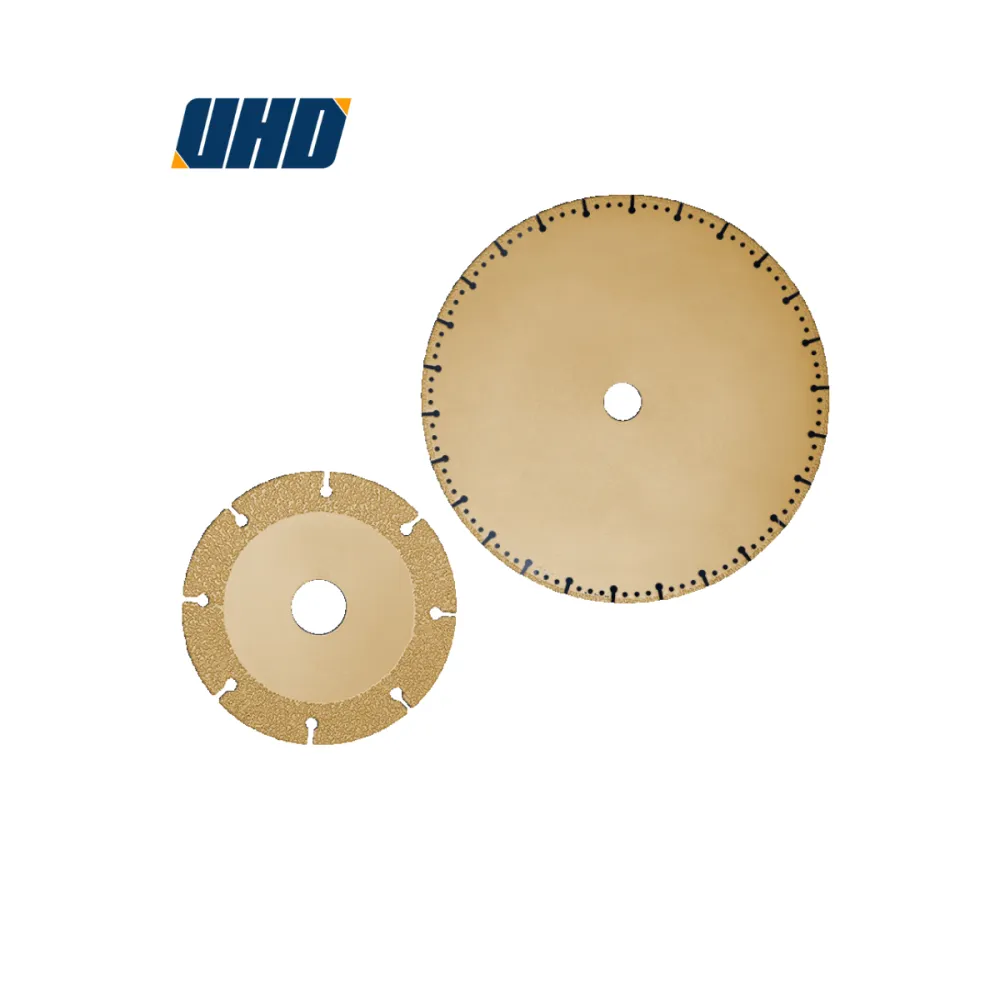
Enhancing Cutting Efficiency and Blade Life: Practical Guide to Coolant Selection and Water Control for 400mm Diamond Saw Blades

23 12,2025
UHD
Application Tips
Dry or wet cutting—what’s right for your project? This practical guide breaks down real-world strategies for choosing the optimal coolant and water control method for 400mm brazed diamond saw blades. Learn how to match your approach to site conditions, material hardness, and project timelines—avoiding overheating damage, boosting cutting speed, and extending blade life. Includes a downloadable decision flowchart and comparative table (dust, equipment wear, cutting speed) to help you make smarter choices fast. Let every blade perform at its best.

How to Choose the Right Coolant for Your 400mm Diamond Saw Blade – A Practical Guide for Contractors & Procurement Managers

You're not alone if you’ve seen a diamond blade wear out too fast or cause unexpected downtime on your job site. The truth? It’s often not about the blade quality—it’s how you manage cooling during cutting.

Why Wet Cutting Beats Dry in Most Cases (And When You Can Skip It)

In construction sites, stone fabrication shops, and municipal projects, choosing between dry and wet cutting isn’t just preference—it’s cost control. According to field data from over 150 contractors across Europe and the Middle East:

Scenario Recommended Mode Avg. Blade Life Gain
Stone Fabrication (Hard Marble) Wet + Low Flow +40%
Urban Demolition (Concrete Slabs) Dry with intermittent pause +25% vs. constant dry
Remote Sites (No Water Access) Dry with thermal monitoring +15% vs. unmonitored dry

For 400mm brazed diamond saw blades—especially those used in high-volume environments—the key lies in balancing coolant flow, material hardness, and project timeline. Too little water? You risk overheating and premature failure. Too much? You waste resources and create unnecessary mess.

“In our experience, 70% of blade failures come from improper cooling—not poor manufacturing.” — John Park, Field Engineering Lead at Global Stone Solutions

A Simple 3-Step Decision Framework for Every Job Site

Use this quick logic tree to avoid common mistakes:

  • Step 1: Is water available? If yes → go to Step 2. If no → consider dry mode with temperature sensors.
  • Step 2: What’s the material hardness? Soft stone (like limestone)? Use low-flow wet cutting. Hard granite? High-pressure spray + continuous flow.
  • Step 3: How long is the shift? Shorter shifts (<4 hrs)? Dry may be acceptable. Longer shifts? Always wet—your blade will thank you later.

This method has helped teams reduce maintenance costs by up to 30% while boosting productivity—because when you cut smarter, you don’t just save money—you build trust with clients who expect consistent results.

Ready to Maximize Your 400mm Diamond Blade Performance?

Download our free PDF decision flowchart—used by top-tier contractors worldwide—to make better choices on every job.

Get the Free Flowchart Now
Name *
Email *
Message*

Recommended Products

Popular articles
Recommended Reading
<#if (articleDetails.articleDetailsRelatedArticles.articleList?has_content)?? && (articleDetails.articleDetailsRelatedArticles.articleList?size>0)> <#if (articleDetails.articleDetailsRelatedArticles.isShow)?? && articleDetails.articleDetailsRelatedArticles.isShow> <#if (articleDetails.articleDetailsRelatedArticles.title)?? && articleDetails.articleDetailsRelatedArticles.title!="">

${articleDetails.articleDetailsRelatedArticles.title}

<#list articleDetails.articleDetailsRelatedArticles.articleList as list>
<#if (list.imgUrl?has_content)?? && (list.imgUrl?has_content)> ${list.imgAlt} <#else> img

${list.title}

${(list.updateTime)?number_to_datetime?string('dd MM ,yyyy')}
Contact us
Contact us
https://shmuker.oss-accelerate.aliyuncs.com/tmp/temporary/60ec5bd7f8d5a86c84ef79f2/60ec5bdcf8d5a86c84ef7a9a/thumb-prev.png